In high-mix manufacturing, the order of operations isn’t just a matter of logistics—
it’s a direct lever for profitability. Traditional scheduling often treats changeovers
as fixed constants, but real-world factory floors tell a different story.
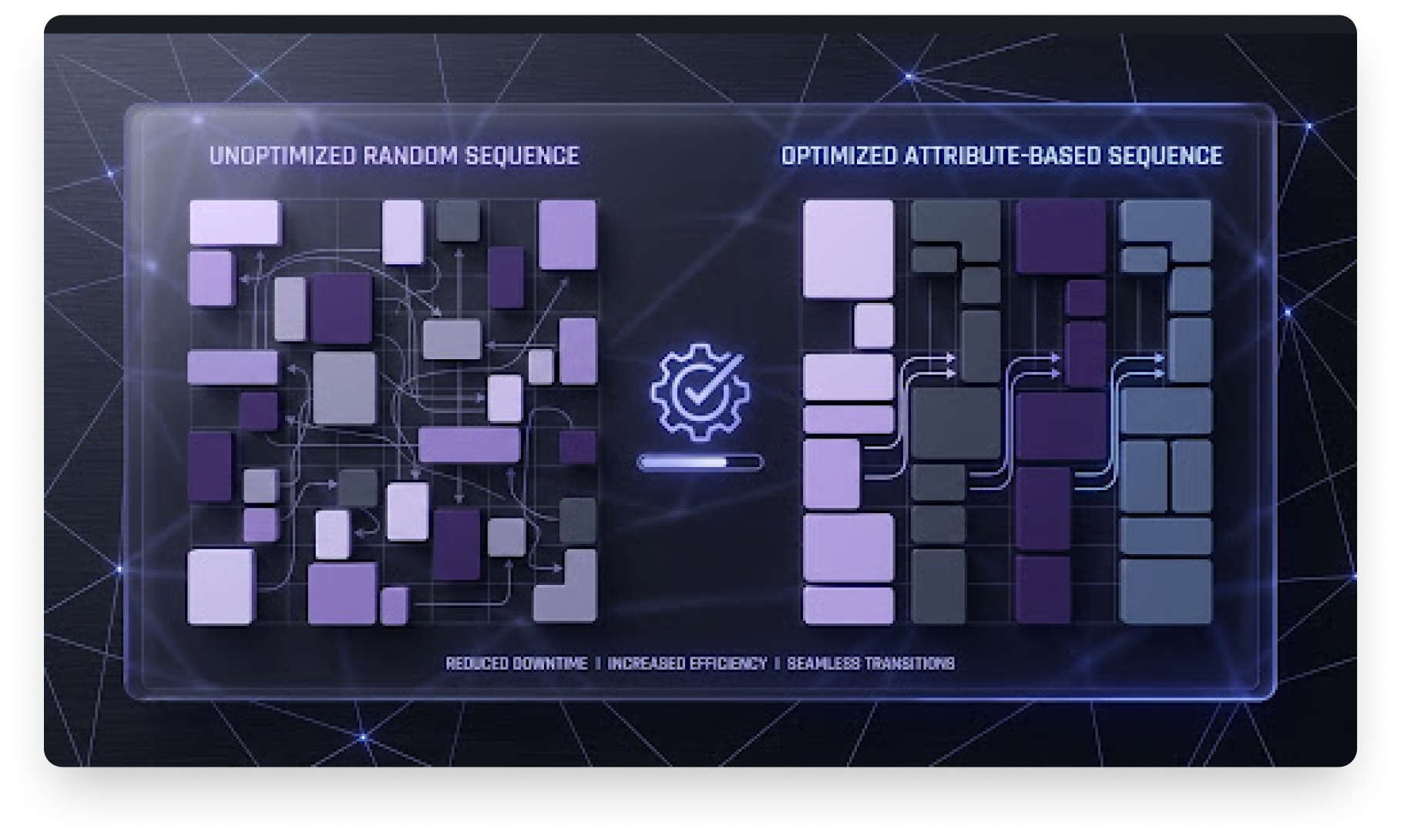
The difference between switching from ‘White Paint’ to ‘Light Grey’ versus ‘Black’
to ‘White’ can represent hours of wasted downtime. This is the essence of
Sequence-Dependent Setup (SDS). By mathematically optimizing the transition
between jobs, manufacturers are unlocking hidden capacity without adding a
single machine.
The Hidden Cost of Unoptimized Job
Sequences
When schedulers lack the visibility to see how Job A affects the setup for Job B, the factory
defaults to “First-In, First-Out” or “Customer Priority” logic. While intuitive, this approach
creates several critical inefficiencies:
How APS Sequence-Dependent
Optimization Works
Modern Advanced Planning and Scheduling (APS) software uses heuristic algorithms to
evaluate millions of potential sequences in seconds. It looks at three primary “Attribute
Pillars”:
Managing transitions between colors or chemical compositions to minimize cleaning cycles.
Sequencing by width or height to reduce mechanical adjustments required on the line.
Tired of Changeover
Bottlenecks?
See how Shiftix APS models your specific factory
constraints.
“Don’t attempt to model every possible variable on day one. Focus on the ‘Big
Three’ setup drivers that account for 80% of your downtime. The Shiftix
platform allows for iterative constraint modeling.”
Connecting Planning to Execution: The MES
Feedback Loop
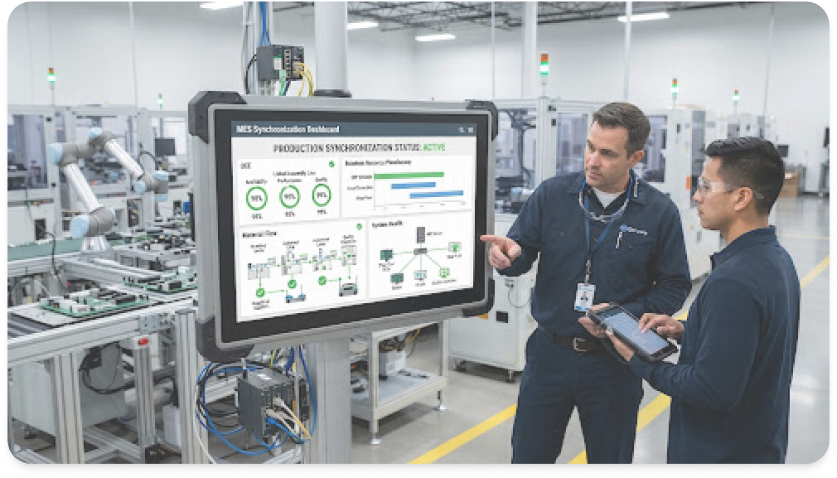
Optimization is only as good as the data feeding it. When your Manufacturing Execution System (MES) provides real-time updates on actual setup times, the APS engine refines its predictive model.
In the race for agile manufacturing, setup time is no longer a “fixed cost.” It is a
dynamic variable that can be conquered through intelligent sequencing. By
shifting from reactive scheduling to attribute-based optimization, your factory
floor transforms into a high-throughput engine.